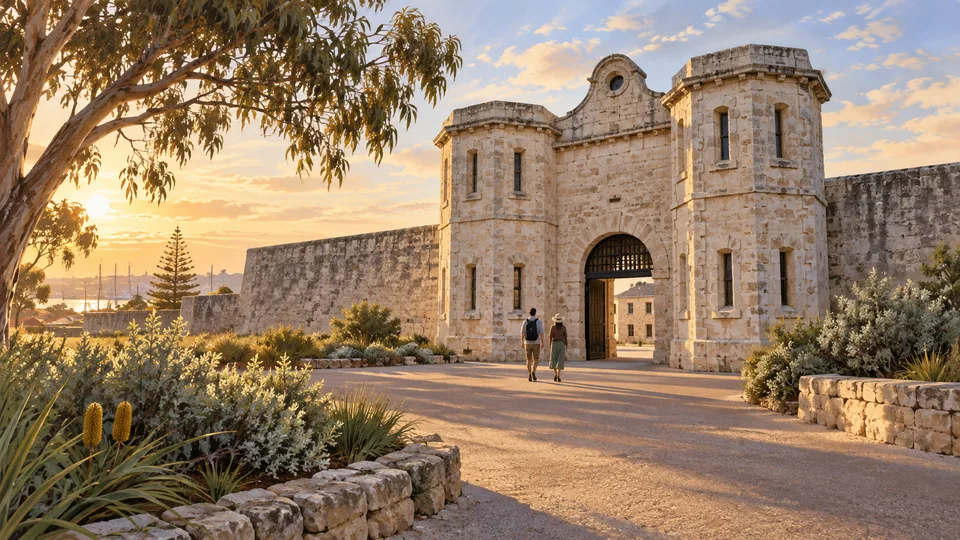
Start with the Gatehouse
Fremantle Prison is at 1 The Terrace in Walyalup/Fremantle. It operated as a maximum-security gaol until 1991 and now presents its difficult history through visitor spaces and guided experiences. The operator says entry to the Gatehouse Complex, including the Visitor Centre, Convict Depot and gift shop, is free. That makes the Gatehouse a sensible first stop: read the context, decide whether a tour suits the people in your group, and ask staff for the current timetable. Access beyond the Gatehouse Complex is through a guided tour, so do not plan on independently wandering the site.
Choose a tour for the question you have
The tour list is broad enough that it helps to choose by focus rather than trying to fit every option into one day. The Convict Prison Tour concentrates on the construction of the prison and the convict era. Behind Bars turns to the prison’s later use as a maximum-security gaol and the routines of incarceration. The True Crime Tour is built around criminal-history stories, while the Tunnels Tour explores underground work and water passages. The operator also runs Torchlight experiences. Read the current descriptions and conditions before booking, because the most appropriate choice depends on your interests, time and comfort with confronting material.
Treat the history with care
This is not a light historic set. The prison’s own information notes its long use as a place of incarceration and visitors may encounter accounts involving punishment, violence, death, trauma, discrimination and institutional practices. Give people in your group enough information to opt in or out. The True Crime and tunnels material can be particularly unsuitable for some visitors or younger children. A good visit does not need sensational detail: allow the guide’s interpretation to set the pace, ask questions respectfully, and leave time afterwards to discuss what you have learned rather than rushing straight to the next attraction.
Check access before you pay
The Tunnels Tour has specific participation conditions. The operator describes ladders, crouching and an underground route, and says the experience is not wheelchair accessible. It also has a minimum age and asks participants to be physically fit and able to follow staff instructions. Those facts are useful even if you do not plan to take the tunnels route: they show why each tour should be checked separately rather than assuming a single accessibility profile for the whole precinct. Contact Fremantle Prison for current access advice, companion or carer arrangements, content questions and availability before making a firm plan.
Build a practical visit
Arrive with time to use the Gatehouse facilities, then book a guided experience that matches your group. Tours can sell out at busy times, and the operator recommends advance planning where a particular time matters. Do not rely on an old timetable or price list: opening hours, departures, tickets and events change, and the official tours page is the current source. The address is an easy point to combine with a central Fremantle walk, but the experience deserves its own breathing room. Wear suitable footwear, follow the guide’s safety directions, and treat the site as a place where heritage and lived consequences sit together.
Before you go
Fremantle Prison offers a structured way to learn about a place that shaped Western Australia’s penal history. Start at the Gatehouse, select a tour with clear eyes about its themes and requirements, and use the operator’s current information rather than borrowed assumptions. The guided model is part of how the historic environment and visitor safety are managed. That practical constraint can improve the visit: it encourages you to slow down, listen to the interpretation and make choices that suit your group. For exact times, pricing, booking and accessibility information, confirm directly with Fremantle Prison before travel.
Sources
Sources last validated: 15 September 2026.